The Rise of the Data Center Lease
Data centers are no longer a niche asset class.
They’ve become core infrastructure for modern businesses, supporting everything from cloud computing and AI to healthcare systems and retail operations.
According to research from CBRE, North American inventory across the four largest data center markets—Northern Virginia, Chicago, Atlanta, and Phoenix—increased 43% year over year in Q1 2025, signaling a sharp acceleration in development and long-term leasing activity.
Workforce data shows a similar shift. Employment figures published by the U.S. Census Bureau indicate a 60% increase in data center–related job categories, reflecting how quickly organizations are building, leasing, and operating these facilities.
As data center leases become more common, finance and real estate teams are facing new questions around how these assets should be categorized, accounted for, and managed within an increasingly complex lease portfolio.
As data center leases become more common, finance and real estate teams are facing a growing set of questions:
-
How should data center leases be categorized?
-
Do they belong with real estate, equipment, or something else entirely?
-
How do you manage them without introducing reporting and compliance risk?
This article breaks down how data center leases differ from traditional leases, how teams are categorizing them in practice, and what that means for managing them accurately.
Why data center leases don’t fit traditional categories
At first glance, a data center lease can look like a standard real estate agreement. Physical space is involved, often within a larger facility or a purpose-built structure.
But the economic substance of the lease tells a different story.
Data center agreements are typically driven by:
-
Dedicated infrastructure such as servers, racks, and power systems
-
Cooling capacity and electrical load requirements
-
Performance, uptime, and redundancy obligations
-
Usage-based cost components rather than fixed rent alone
Because of this, treating data center leases like office, retail, or industrial leases can create gaps between how the asset is used and how it is reported.
How data center leases are commonly categorized
What we see in practice at Spacebase
Across growing lease portfolios, many teams categorize data center leases as equipment leases, often structured as finance leases.
This approach is usually driven by a few consistent factors:
-
The primary value of the lease is tied to infrastructure and systems, not square footage
-
Contract terms are often more standardized and shorter than traditional real estate leases
-
The lessee assumes many of the economic risks and benefits associated with the underlying equipment
Categorizing data center leases this way tends to align more closely with how the assets function operationally and how they are reviewed during audits.
How data center leases differ from typical equipment leases
Even when classified as equipment leases, data center agreements introduce complexities that require more careful tracking.
Wear and tear assumptions
Data center infrastructure does not depreciate like a single piece of machinery. Load intensity, uptime demands, and environmental conditions can all affect useful life assumptions.
Cooling load factors
Cooling capacity is a central component of most data center leases. Thresholds and overage charges can materially impact costs, making it important to track these terms outside of static payment schedules.
Electrical usage
Power costs are rarely fixed. Charges often fluctuate based on actual consumption, requiring closer coordination between operational data and lease records.
These variables make data center leases more dynamic than most equipment leases, even when they fall under the same accounting category.
How to manage data center leases in Spacebase
Spacebase is designed to support complex, non-standard lease structures without forcing them into rigid templates.
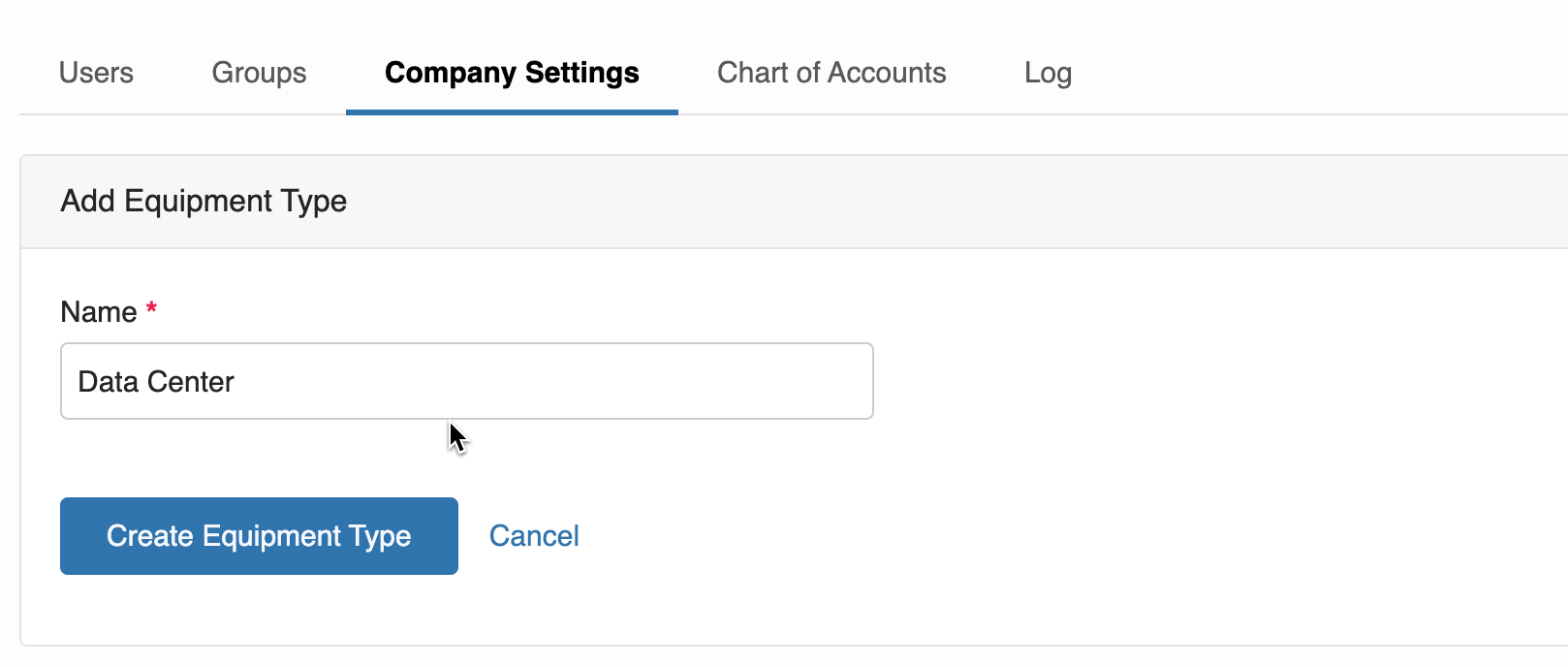
Add data center infrastructure as custom equipment
Data center assets can be configured as custom equipment, allowing teams to define attributes such as power capacity, cooling requirements, and usage-based terms. Adding a Data Center to your Lease Portfolio
Track them alongside the rest of your portfolio
Once added, data center leases live alongside office, retail, and other equipment leases in a single system. This gives finance and real estate teams a unified view of the portfolio while still preserving the details that make data center leases unique.
This approach helps teams maintain consistency in reporting without oversimplifying assets that carry higher operational and compliance risk.
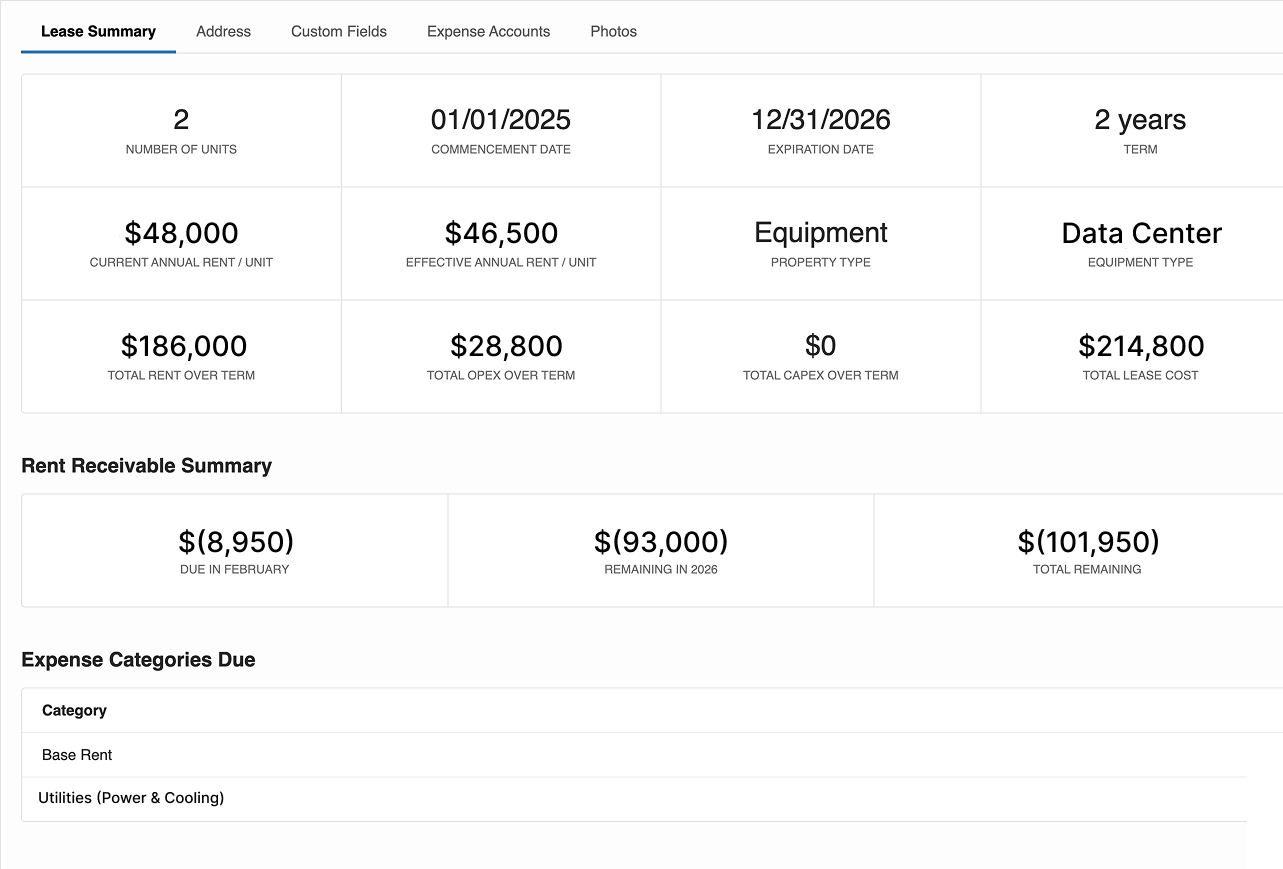
Data Center Dashboard
Once configured, data center leases appear in your dashboard view, allowing teams to monitor key dates, payment schedules, and lease terms at a glance. This makes it easier to track active data center obligations, identify upcoming milestones, and maintain visibility across complex portfolios. Equipment Lease Dashboard
Conclusion
Data centers are becoming a permanent and growing part of modern lease portfolios, but they do not behave like traditional real estate assets. Categorizing and managing them incorrectly can introduce reporting inconsistencies and audit risk as portfolios scale.
By aligning data center leases with their economic reality and using flexible lease administration tools, teams can maintain accurate, defensible reporting as complexity increases.
If your organization is managing data center leases today or expects to in the near future, it may be time to reassess whether your current lease structure truly supports how these assets operate.
Request a demo to see how Spacebase supports complex assets like data centers with clarity and control.

Brooke Colglazier
Marketing Manager